U Do It Legal
Legal Firm for Self-Representing Litigants
U Do It Legal (UDIL) is a legal firm dedicated to expanding access to justice for self-representing litigants (SRLs) in California family law cases. The firm provides attorney-vetted legal information and guided online experiences that help users navigate their cases and complete court forms with confidence. UDIL’s mission is to provide clear, user-friendly tools and resources to help SRLs navigate the legal system more confidently and effectively.
Problem
SRLs struggled to navigate UDIL’s platform and locate essential family law resources during high-stress legal situations.
Outcome
A clearer, more guided platform experience helped SRLs complete legal tasks more efficiently and confidently.
Role: UX-UI Designer
Tools: Figma and Squarespace
Timeline: January 2025 – May 2025
(Semester team project)
Contributions:
- Designed About Us Page
- Designed Founder Bio Pages
- Co-Led Heuristic Evaluation
- Co-led UX Documentation
- Conducted Secondary Research
- Defined Target User Group
- Led Client Meetings
- Led User Testing
- Provided Mentorship to Underclassmen
Project Context
UDILs Mission
Many SRLs fail to succeed in court, not due to the strength of their case, but because of the following procedural barriers ->
These challenges often result in unfair outcomes. UDIL aims to change that by making legal help more approachable and accessible for those who need it most.

My Design
About & Bio Page:
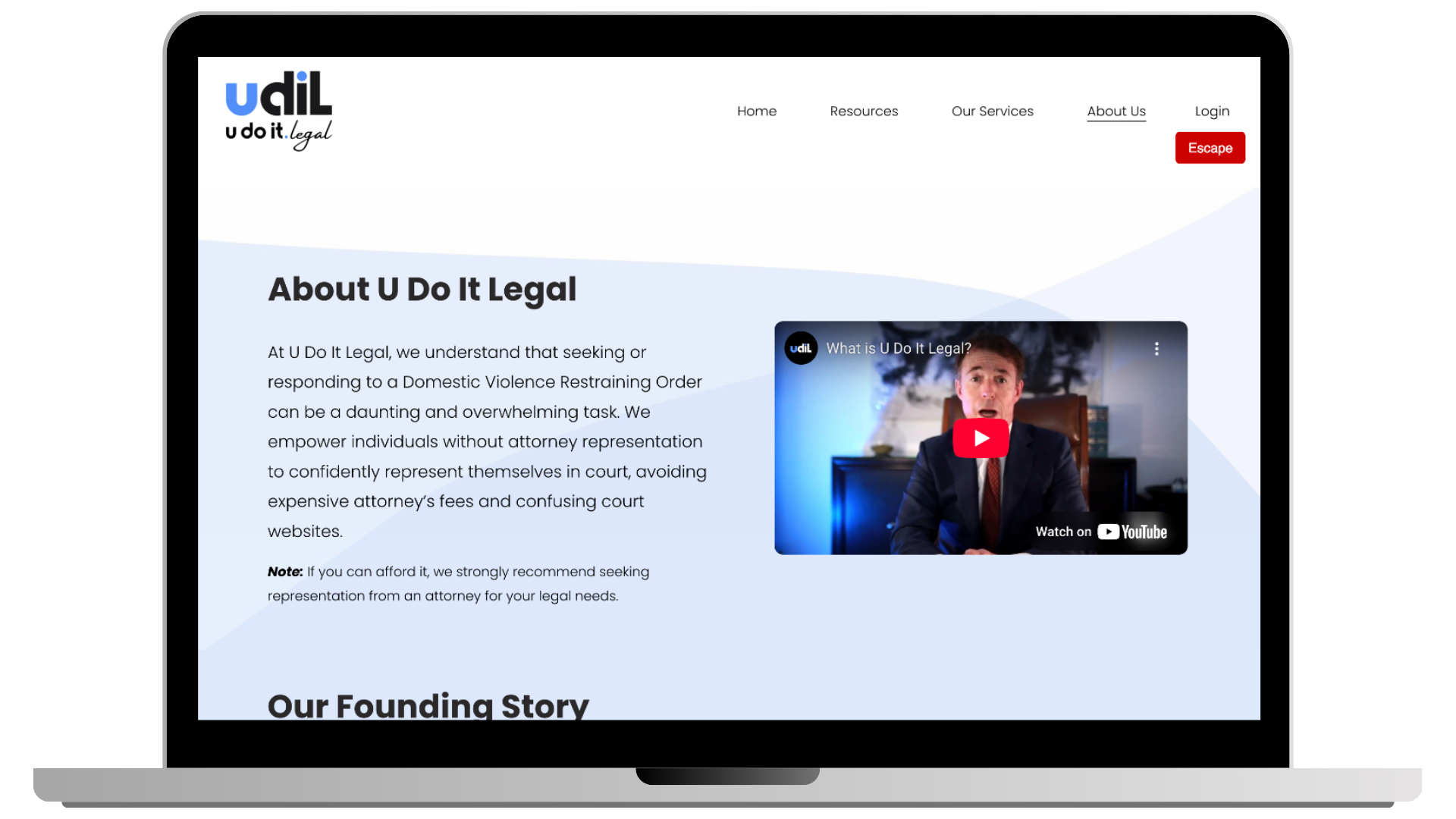
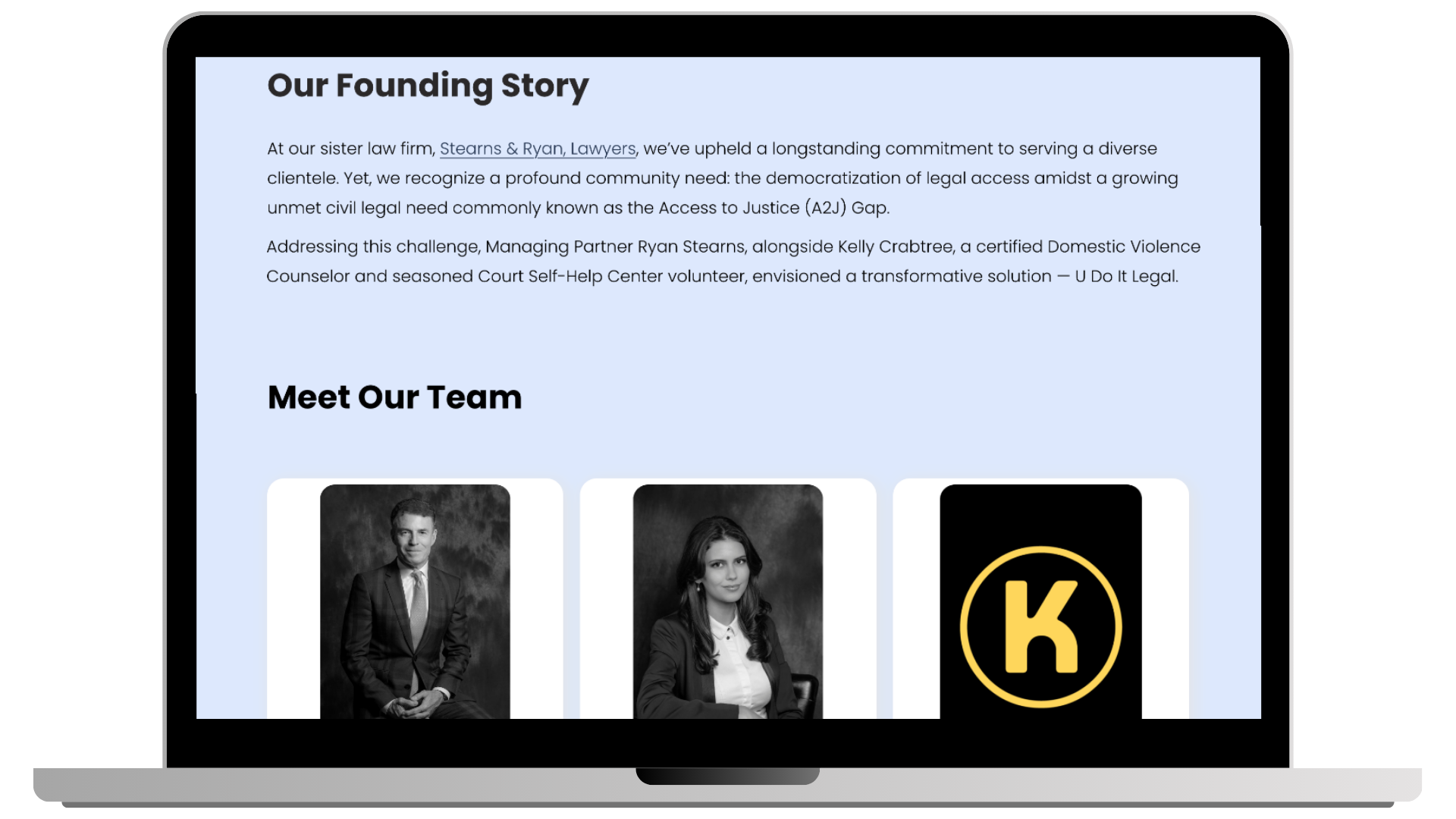
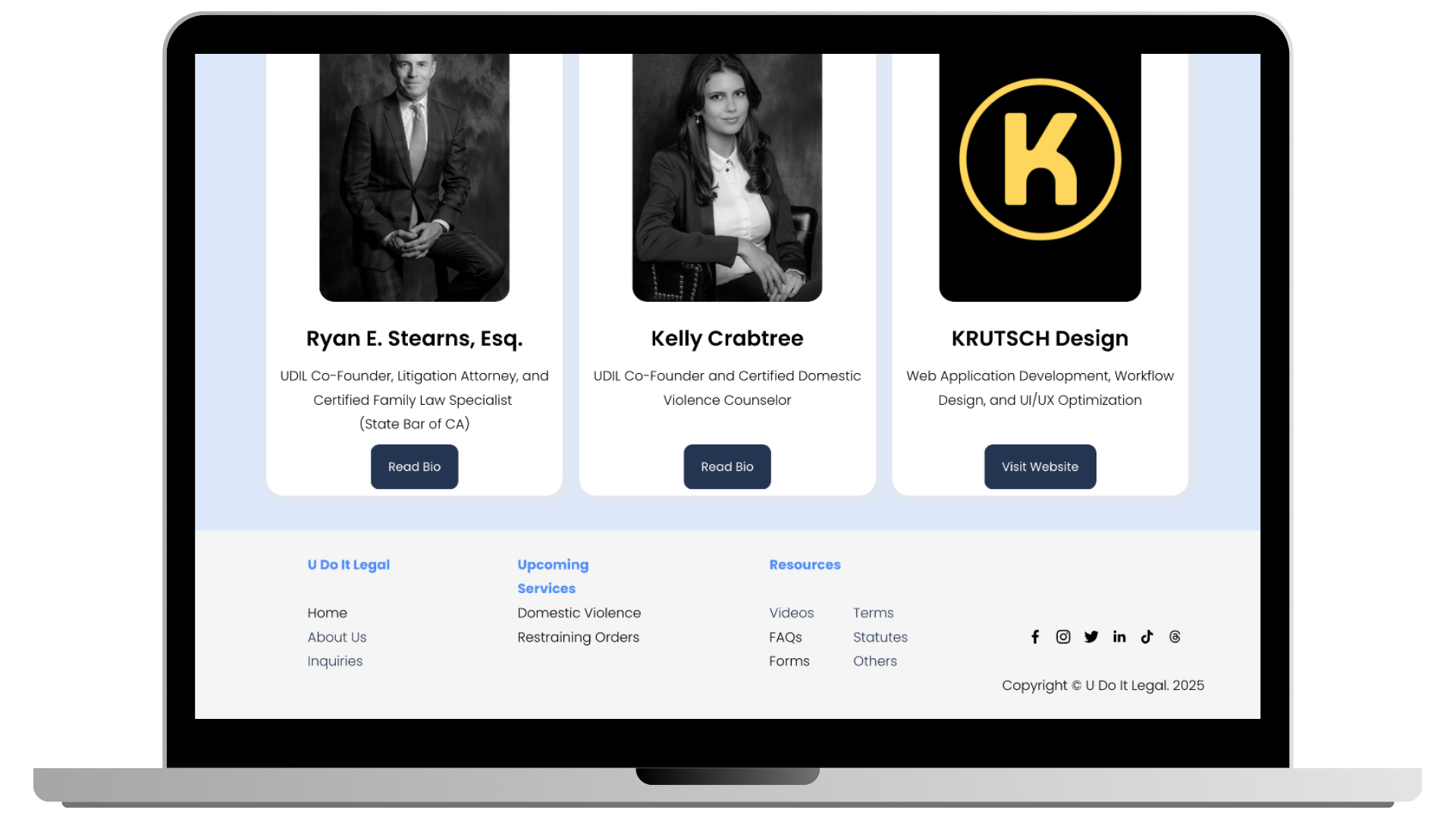
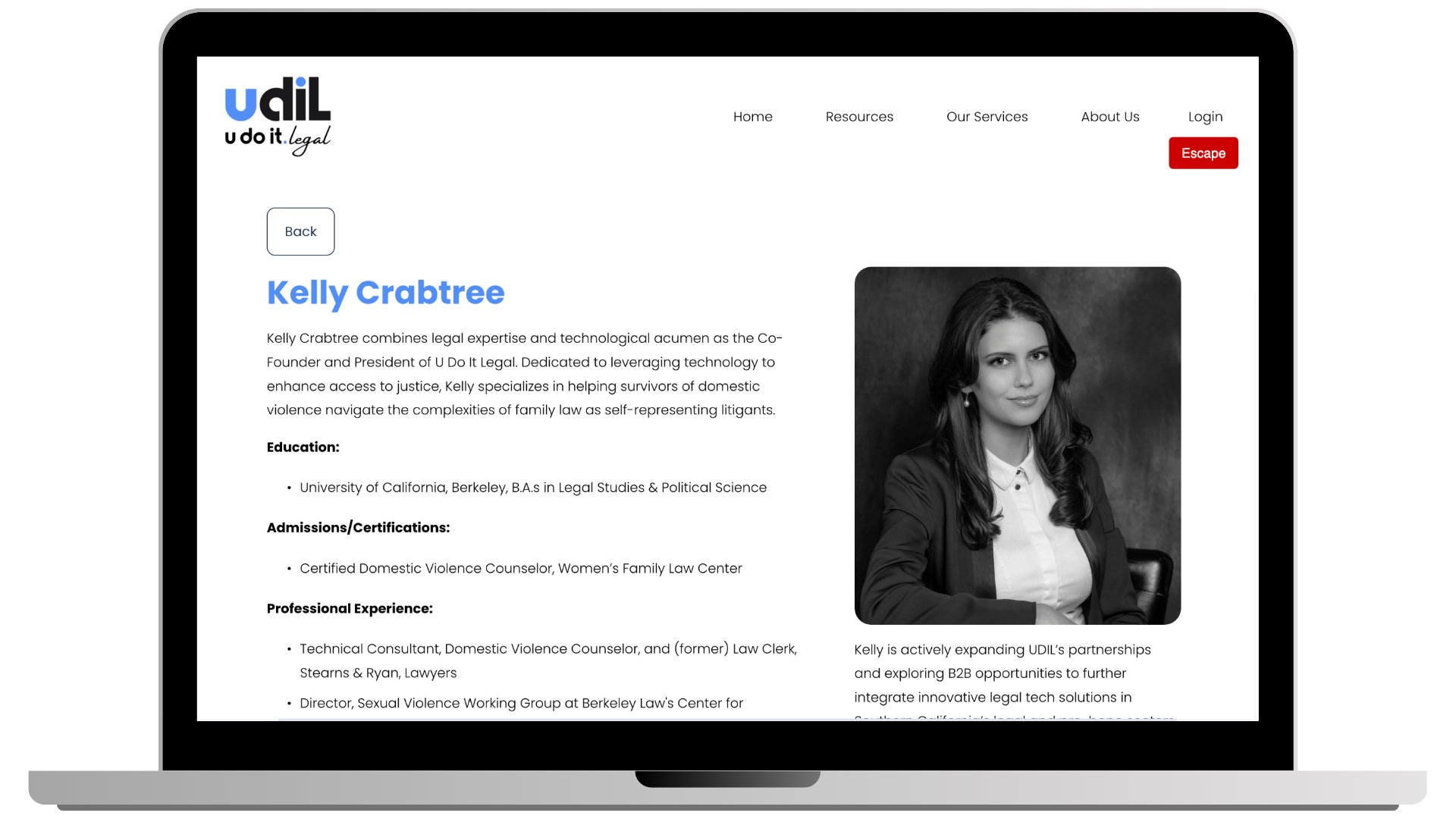
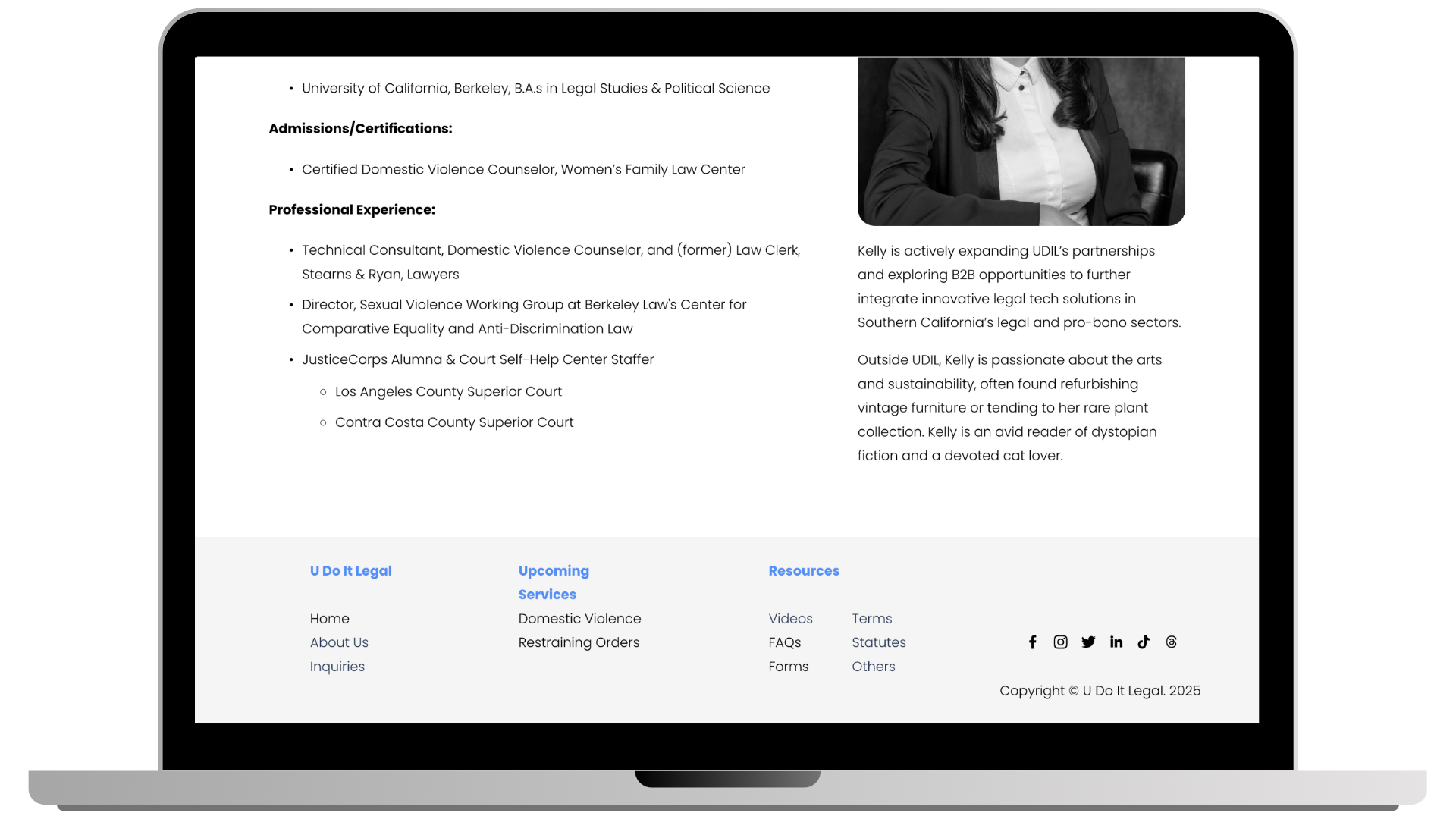
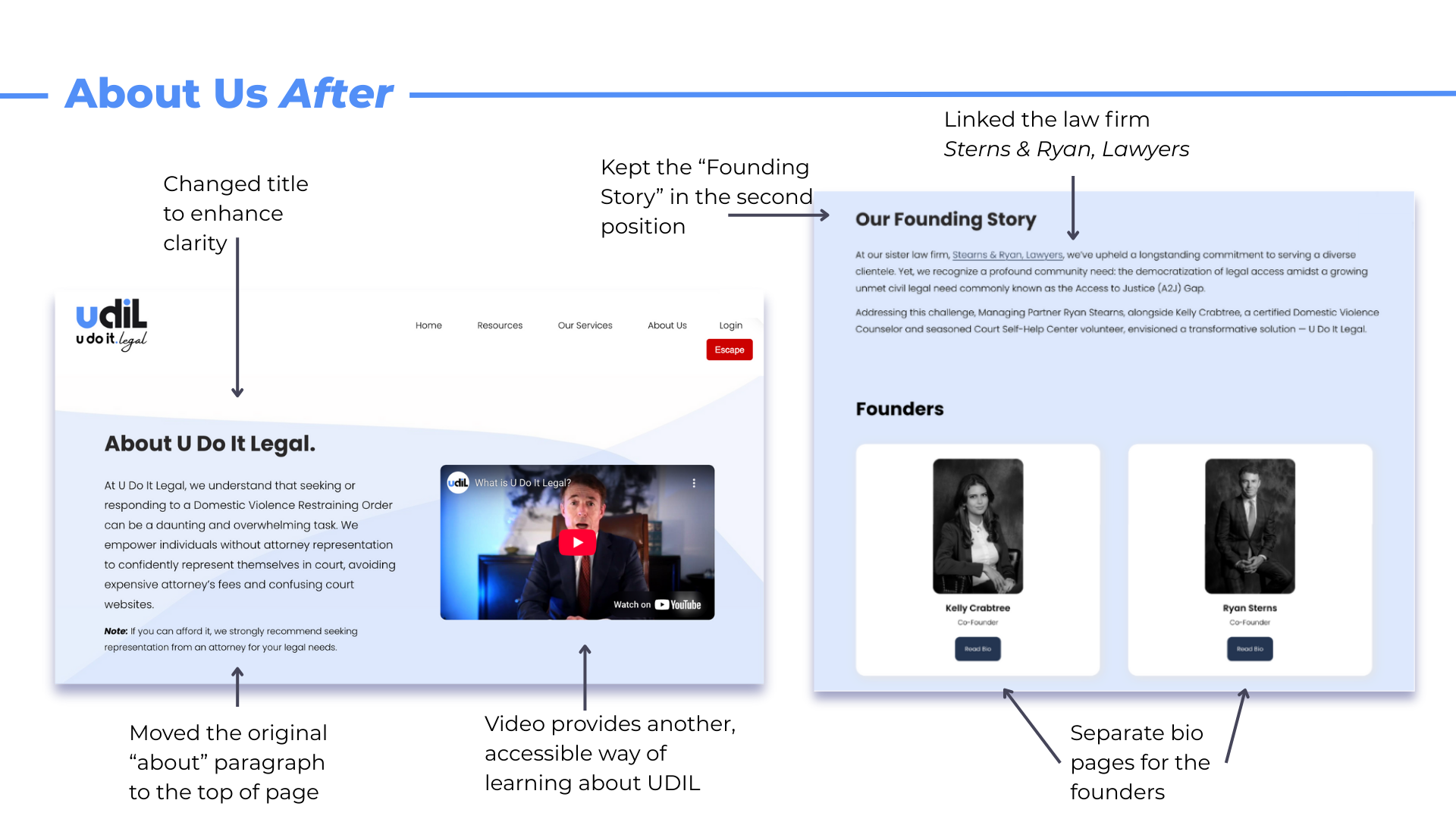
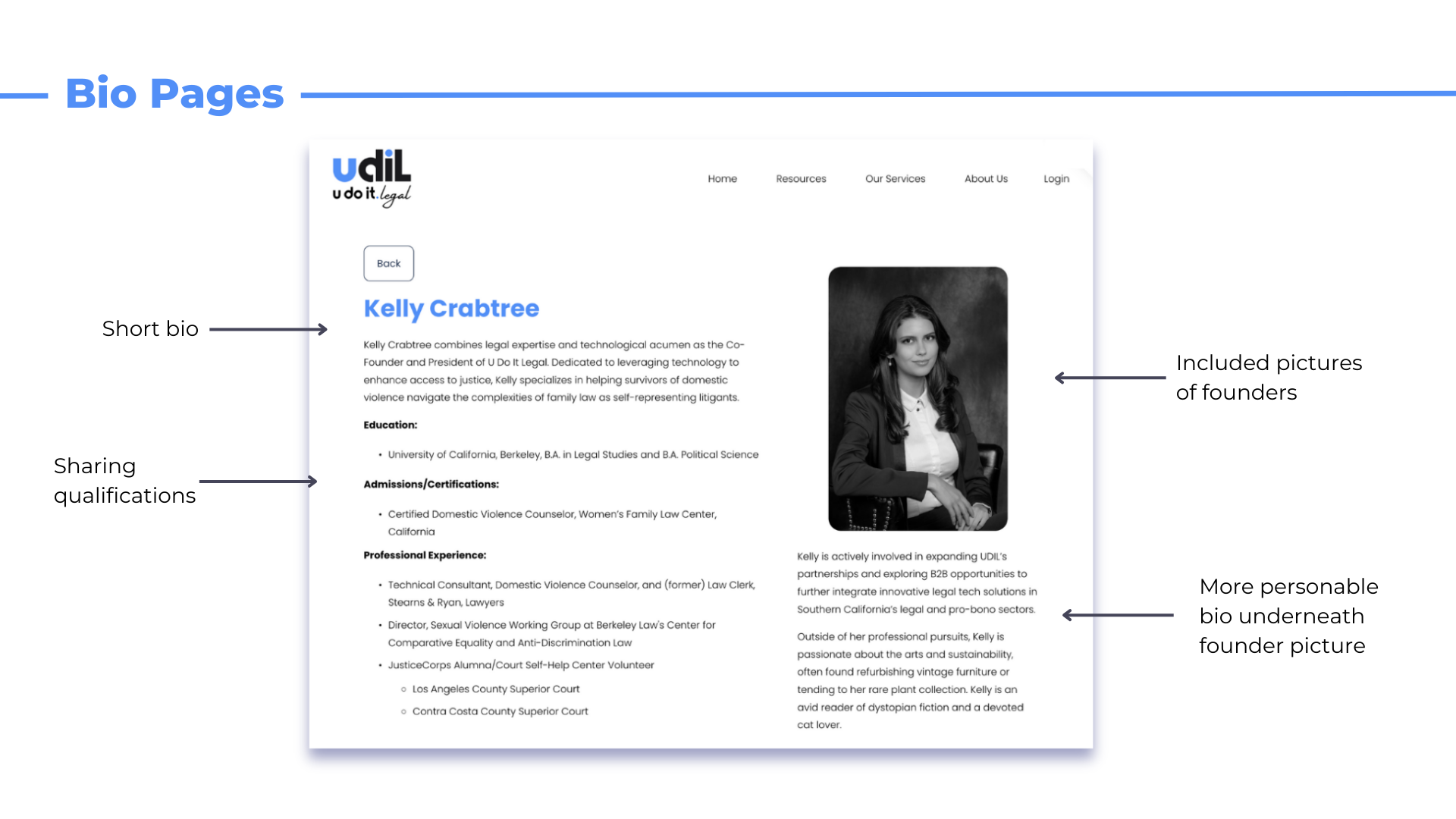
The About and Bio pages build trust by clearly presenting the team’s qualifications and expertise. By increasing transparency and credibility, these pages help users feel more confident using UDIL’s resources and continuing their legal journey on the platform.
Click the button to see the full final product
Our Goal
Improve the usability and effectiveness of UDIL’s website.

Who We Are Designing For
UDIL’s platform helps people navigate legal issues, especially those who can’t afford or access a lawyer. Our research showed that our main users are self-representing litigants, people handling their own legal cases, within the spouse-spouse category. UDIL focuses on SRLs dealing with family law cases in California, who are often managing these cases during stressful personal or family situations.
Project Milestones
To structure this project into clear, actionable goals, my team established three key milestones to help guide our progress.
01.
Exploration & Research
Identify UDIL’s primary self-represented litigant (SRL) audience through a website audit. Analyze comparable platforms to uncover best practices and effective UX patterns.
02.
Design Iteration
Ideate through the creation of low-fidelity prototypes. Then add/create improvements to the official Squarespace pages.
03.
Design Validation
Apply validation insights to guide design and move into the final high-fidelity implementation on UDILs website.
01. Exploration & Research
Defining UDIL’s Target User Group
Since UDIL primarily serves SRLs in California, we developed 12 user personas (2 personas per SRL category) to reflect the diverse needs and legal contexts of this audience. To inform these personas, we facilitated a large-scale brainstorming session exploring the different situations in which SRLs may seek UDIL’s resources. This process resulted in 6 overarching SRL categories (shown below).
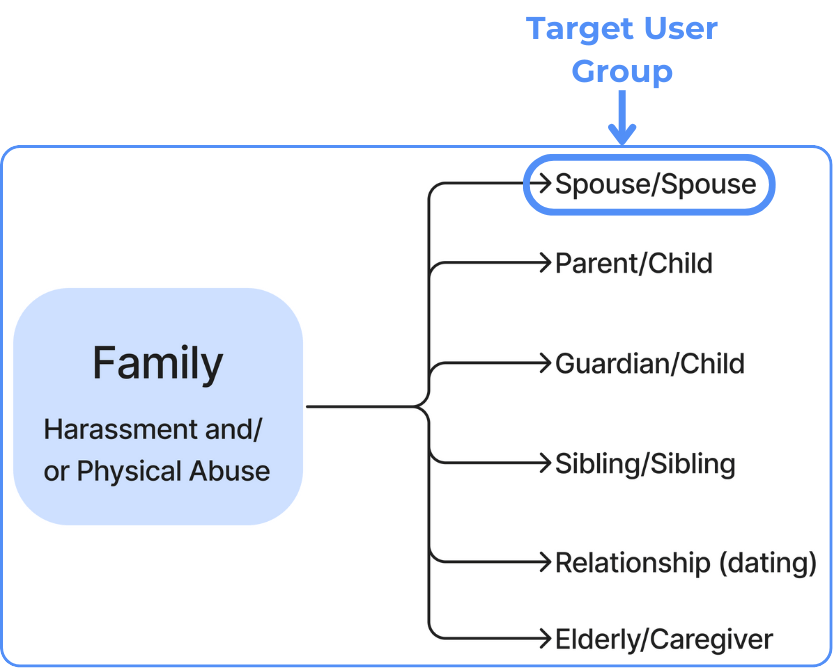
We applied Nielsen’s 10 Usability Heuristics to evaluate UDIL from these 6 perspectives.
This helped us surface usability issues tied to navigation, clarity, and content accessibility within the website.
Identifying Necessary Improvements

Through Affinity Mapping, we synthesized findings to highlight the most pressing issues of UDILs site:
- Confusing navigation
- Lack of clear entry points
- Overwhelming animations
- Limited visibility into who UDIL serves
Key Insight:
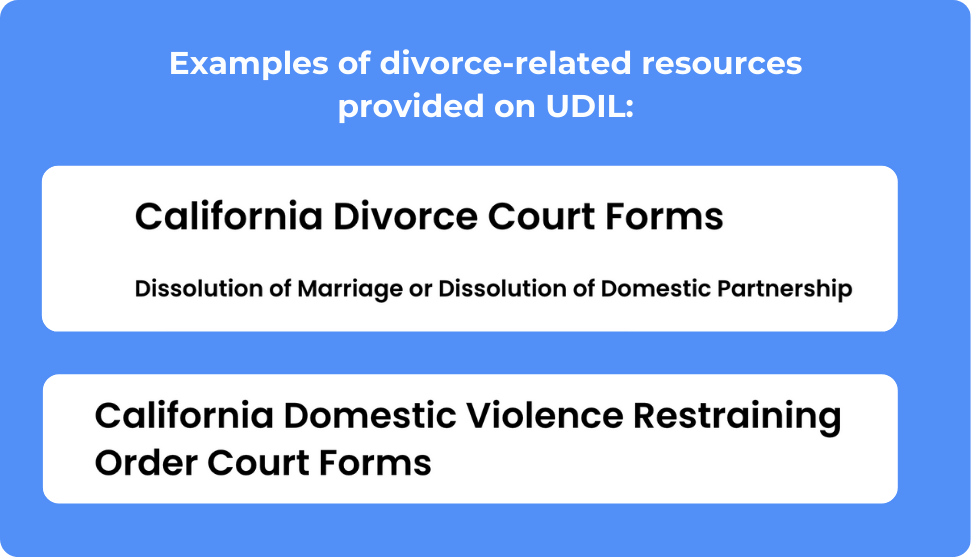
Through this, we identified that UDIL’s legal content is primarily tailored to the spouse-to-spouse cases for SRLs.
This was evident in the types of cases emphasized and the prominence of divorce-related resources throughout the site
Gaining Inspiration
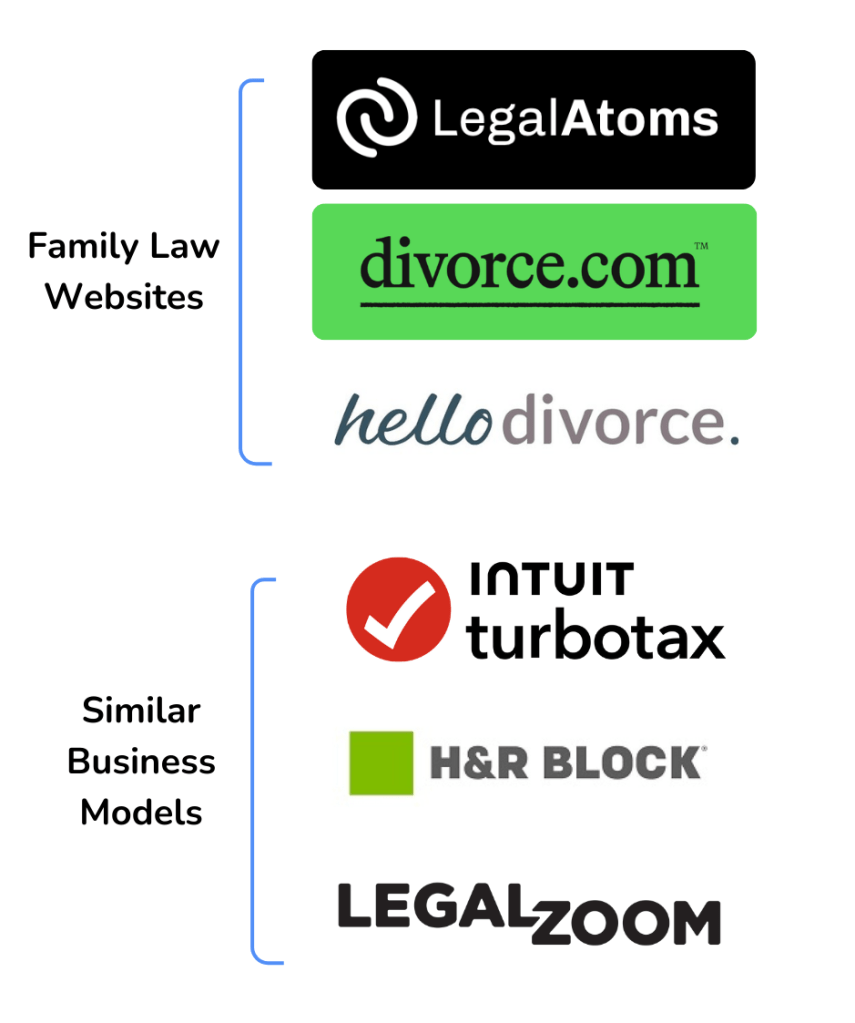
To help UDIL better reach and support its target audience, we completed a comparative analysis to analyze websites similar to UDIL’s, assessing their strengths, weaknesses, and potential areas for improvement. The comparative analysis helped us consider…
- How users are introduced to legal information
- Features that support clarity and ease of navigation
These insights informed design recommendations to help UDIL.
This milestone created alignment around who the product is for and ensured that subsequent design work was grounded in real user needs.
02. Design Iteration
After completing our research, we translated our insights into ideas through team discussions, focusing on new pages and targeted improvements to existing ones.
We began sketching and designing low-fidelity mockups, focusing specifically on how to incorporate the design recommendations from our findings into our created pages and redesigns. Below are the lofi-screens I created.
The following pages were designed/created:
- UDIL Homepage (redesign)
- About Page (redesign)
- Videos Page (redesign)
- FAQ Page (redesign)
- Resource Homepage (creation)
- Resource By Case Type Page (creation)
- Eligibility Quiz (redesign)
- Package Sorting Quiz (redesign)


High Fidelity Implementation
We then transitioned to high-fidelity implementation by directly modifying and creating our pages in Squarespace, the web hosting platform UDIL is using.
Once we completed the high-fidelity designs in Squarespace, we moved into user testing to gather feedback, validate our design decisions, and identify areas for further improvement.
03. Design Validation
We then conducted user testing with multiple participants to gather insights for future iterations. Our goals were to determine whether users would engage with our redesigns, evaluate if the designs accomplished key experience principles, and identify any additional changes that could improve the user experience.
Testing
After creating our high-fidelity designs, we then tested them using two main methods…
AB Testing
A/B testing conducted during the design phase clarified user preferences and guided confident refinement of key features and layouts.
Usability Testing
Persona-based Usability Testing then validated the redesigned experience, demonstrating improvements in task completion, navigation efficiency, and overall user satisfaction.
Following successful validation, the designs were implemented and published on the Squarespace site.
Final Design
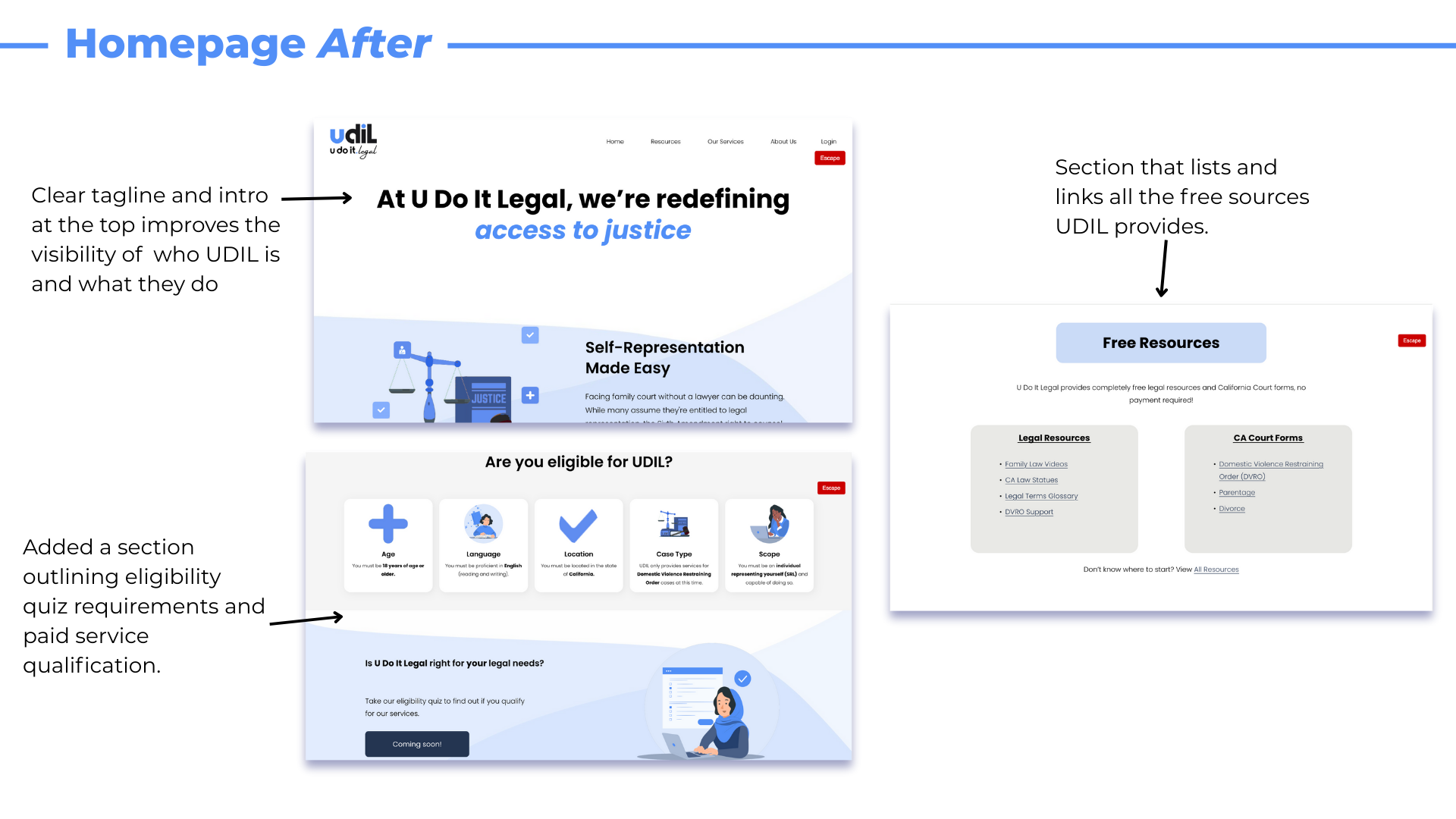
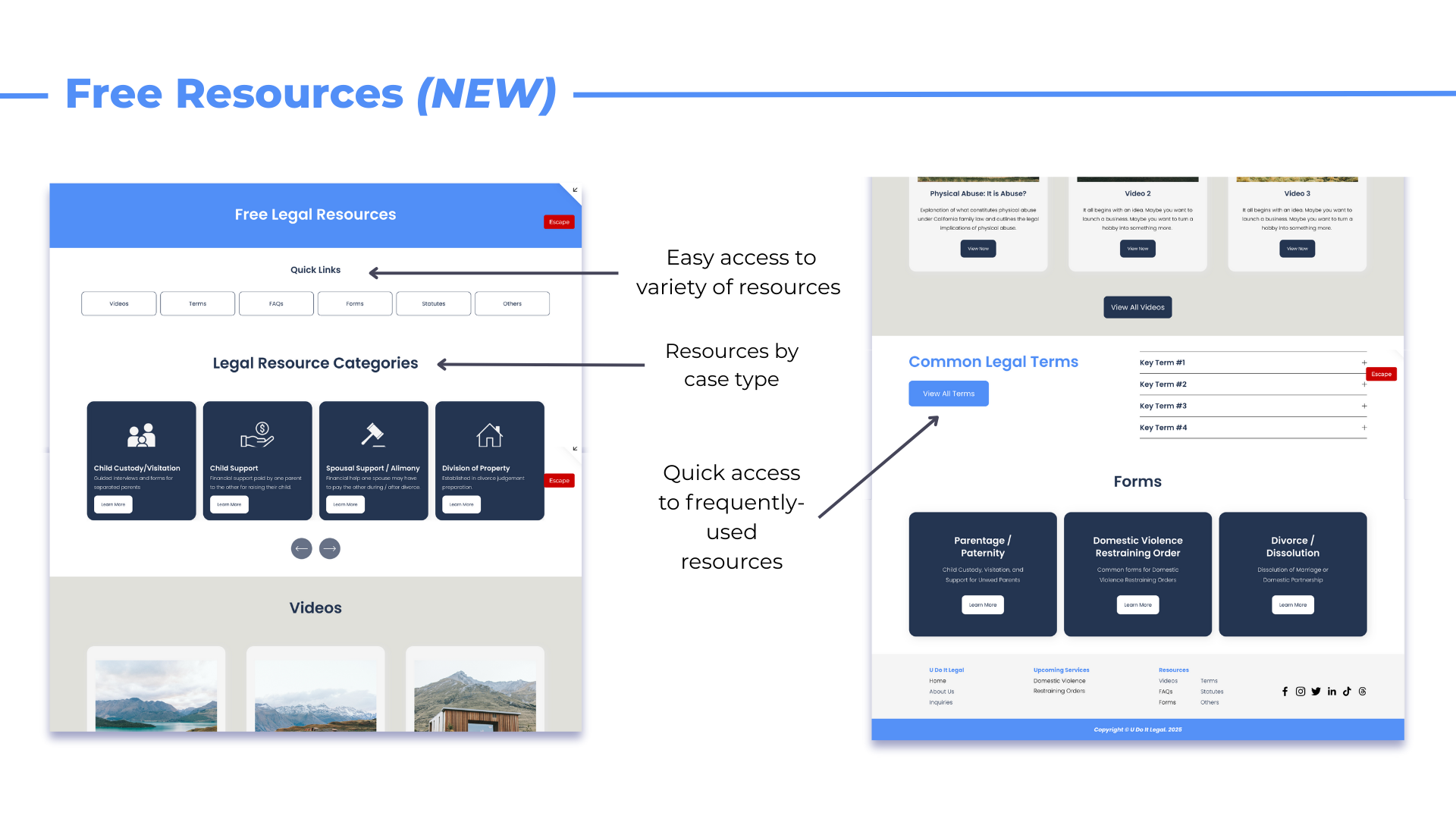
From our extensive research, sponsor meetings, testing, and design phases, here are the changes and new pages we made for the U Do It Legal website
Home Page: (Before vs After)

Free Resources Page: (New)

About Us Page: (Before vs After)

Bio Page: (New)
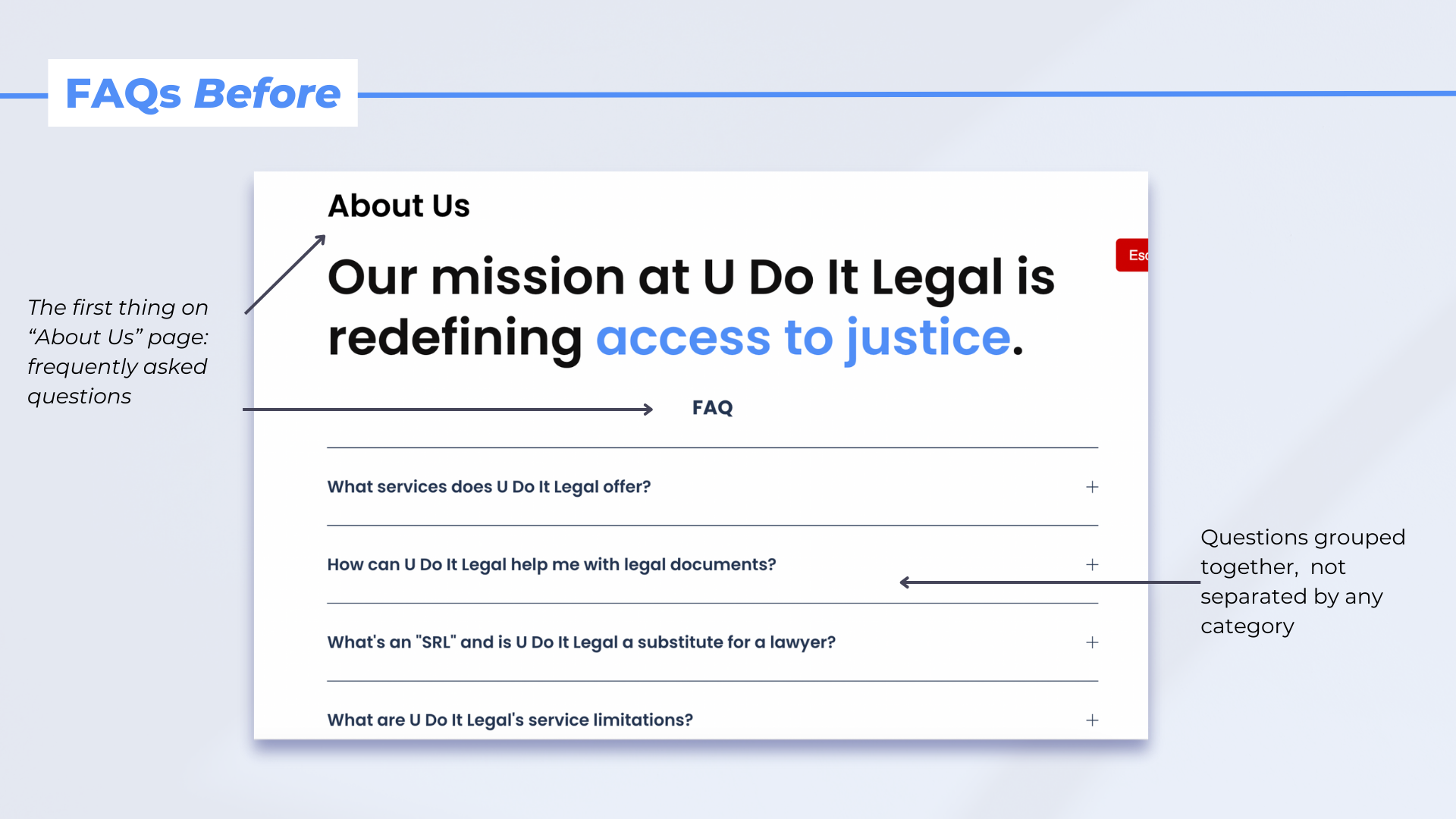
FAQ Page: (Before vs After)

Thanks for Reading!
Let’s Get in Touch
madiloyd@icloud.com
 madiloyd.com