Donate Equity
A webapp that processes Complex Business Donations for nonprofits
DonateEquity is a startup that connects donors with nonprofit leaders and facilitates the processing of Business Equity Donations (BED), a complex form of giving. At present, the entire process is managed by a single individual, whose goal is to transform this hands-on workflow into an online platform that educates, connects, and supports nonprofits in navigating complex donations.
Problem
How can we educate nonprofits about the BED donation type while ensuring a smooth onboarding toward securing business donation funds for their nonprofit?
Outcome
My team and I focused on designing the educational and onboarding experience for Donate Equity.
Role: UX Designer
Timeline: Jan 2024 – May 2024
(Semester group project)
Tools: Figma
Contributions:
- Designed Landing & Quiz Pages
- Conducted Primary & Secondary Research
- Led Research Interviews
- Led Client Meetings
- Led User Testing
- Helped Create UX Documentation
Project Context
What are Business Equity Donations (BED)?
Business Equity Donations (BED) involve donating partial or full ownership of a business, converting appreciated interests into charitable contributions. These donations offer significant benefits for both donors and nonprofits..
Processing BED is complex so generally only larger nonprofits partake in this kind of donation.
Currently, there is little information available about BEDs, outside of the resources DonateEquity provides. Many nonprofits struggle to fully understand the process enough to want to process these donations, or still feel that they do not have sufficient knowledge while in the process of BED.
Final Design
Landing Page:
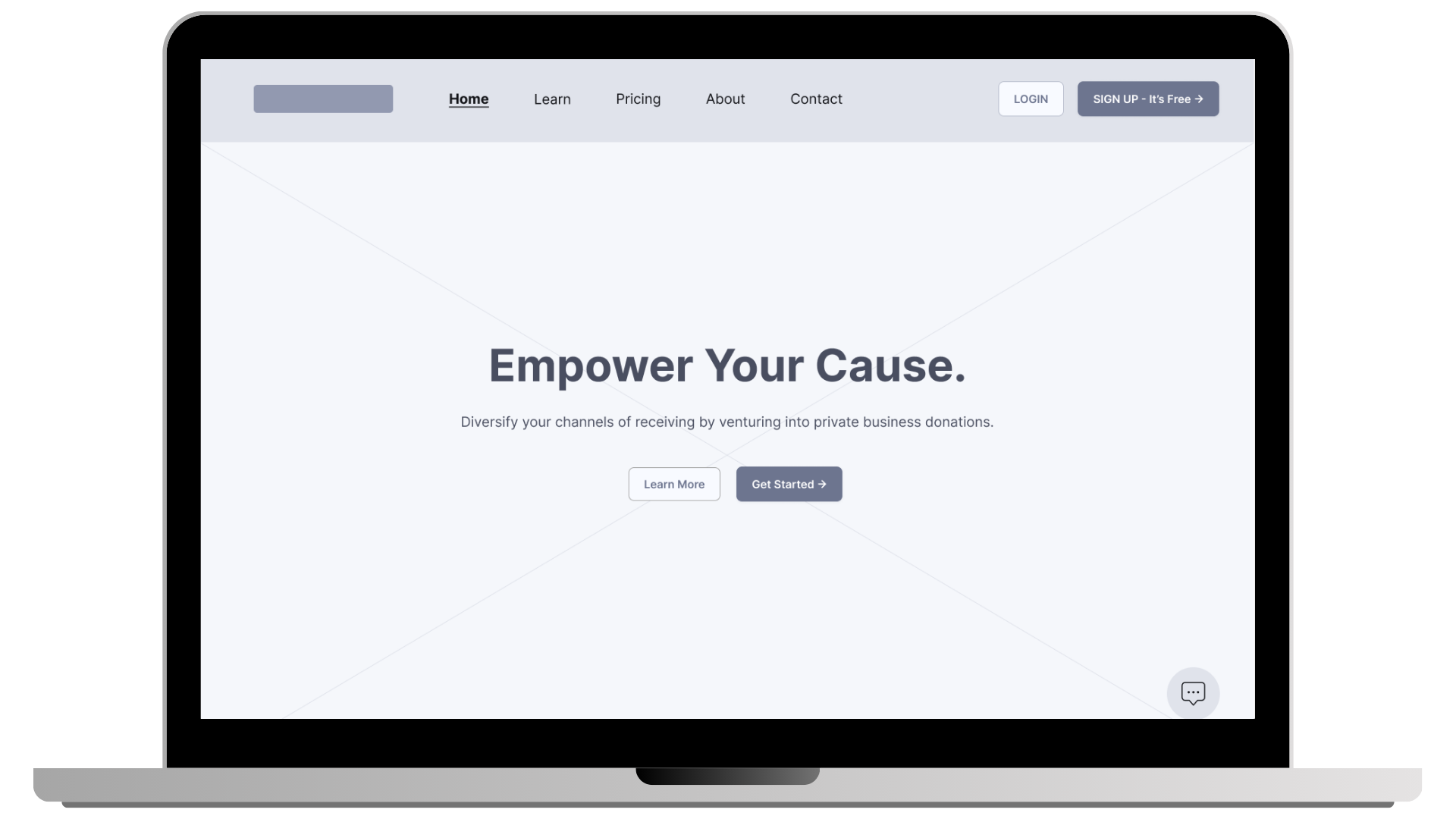
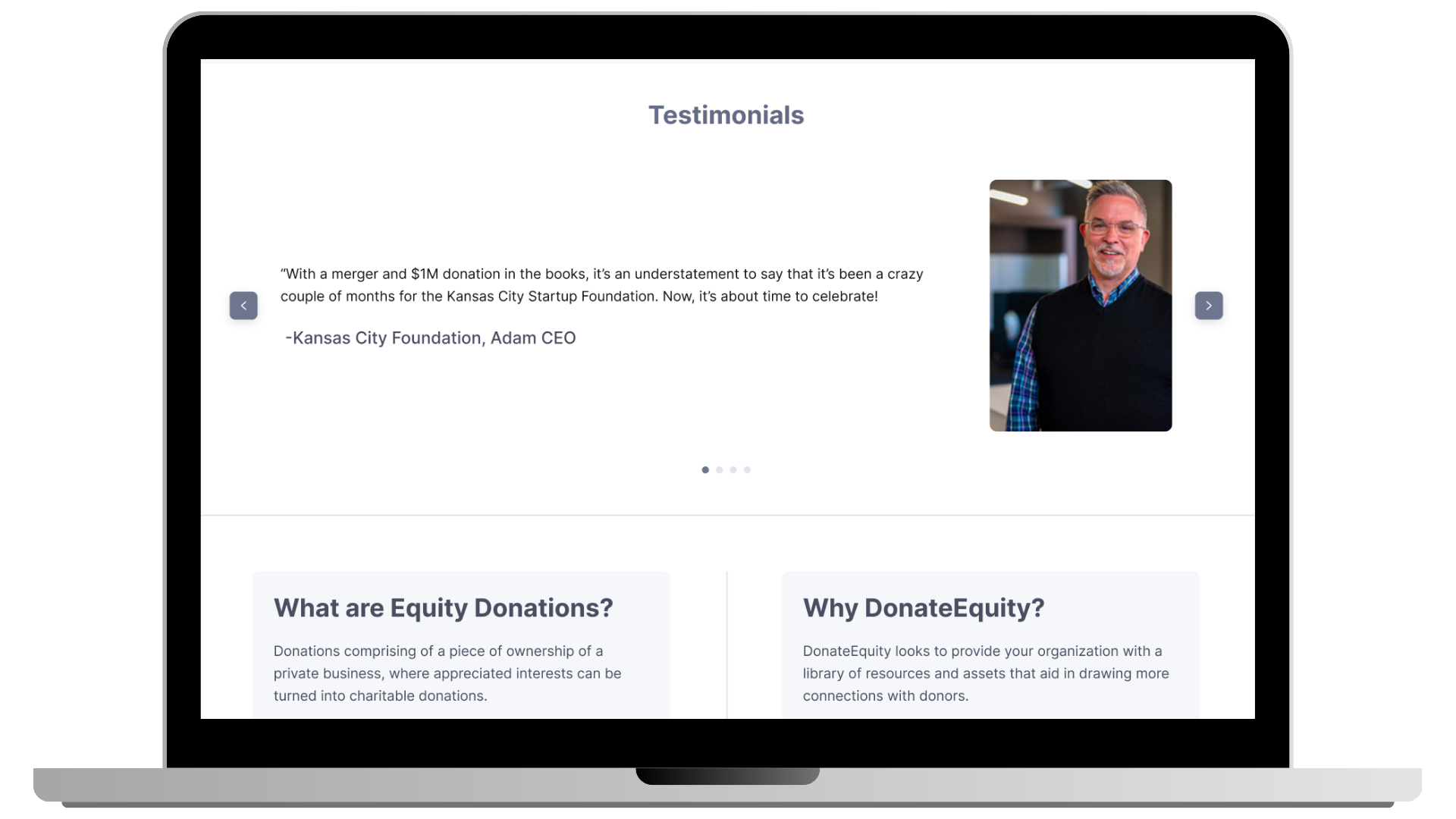

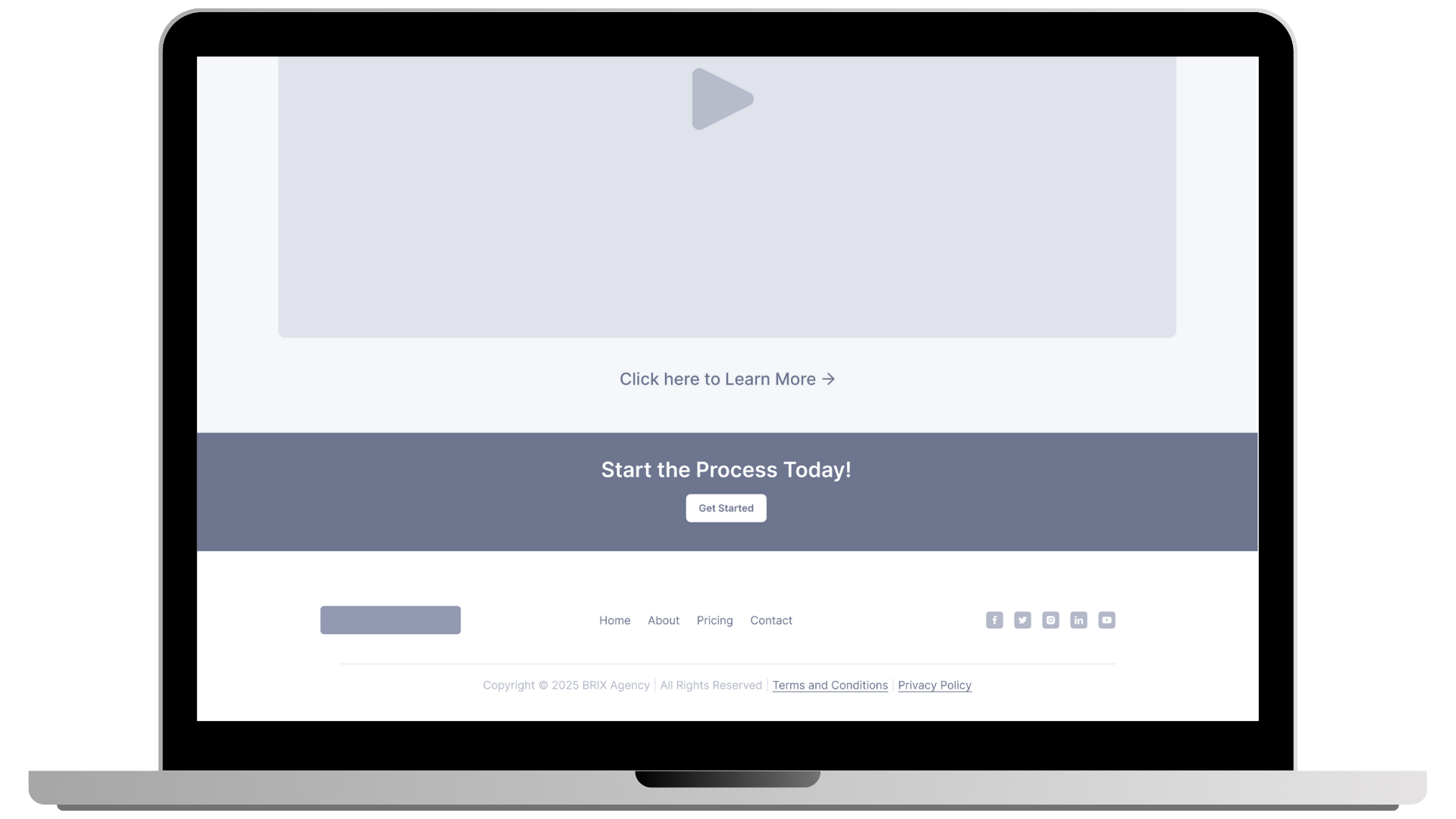
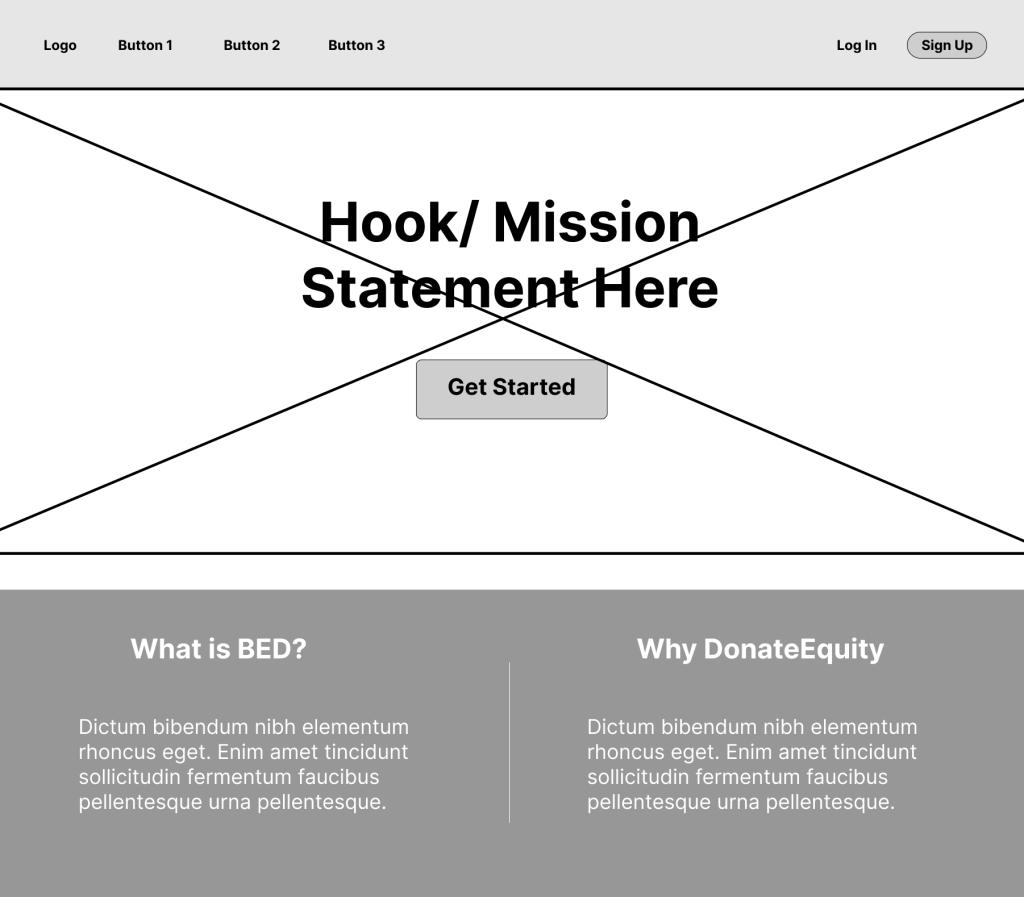
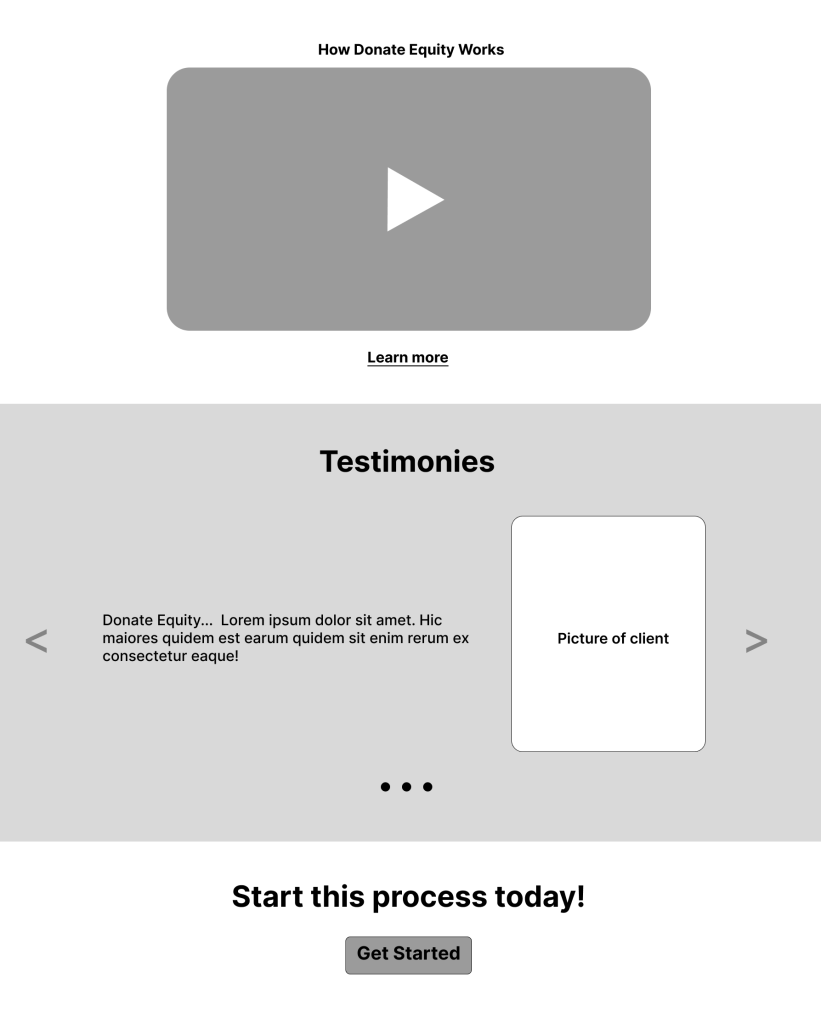
The initial onboarding with information aimed at teaching nonprofits about BEDs and the details of the process. It will include detailed information such as resources, pricing, testimonies, etc.
Information Page:
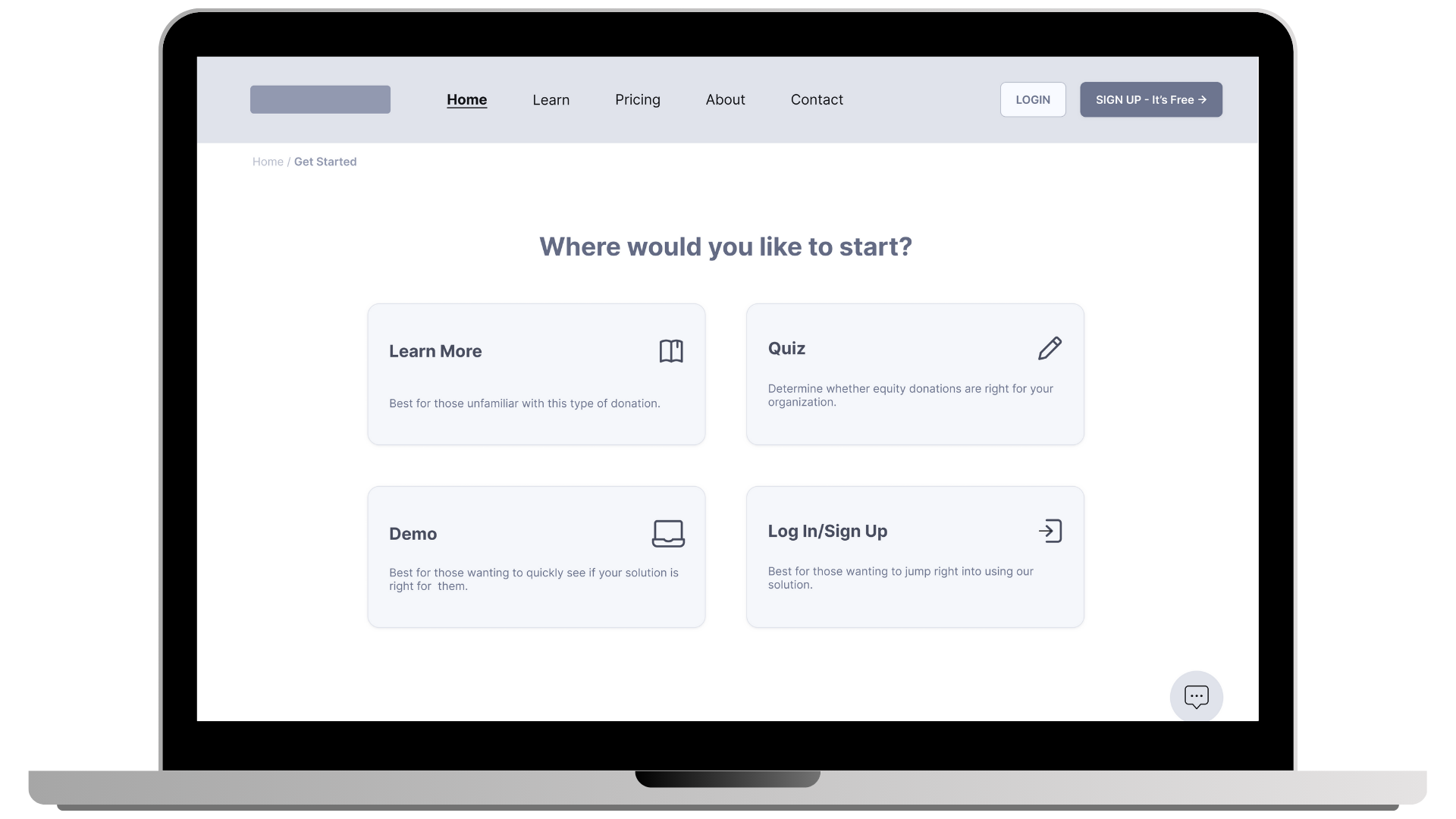


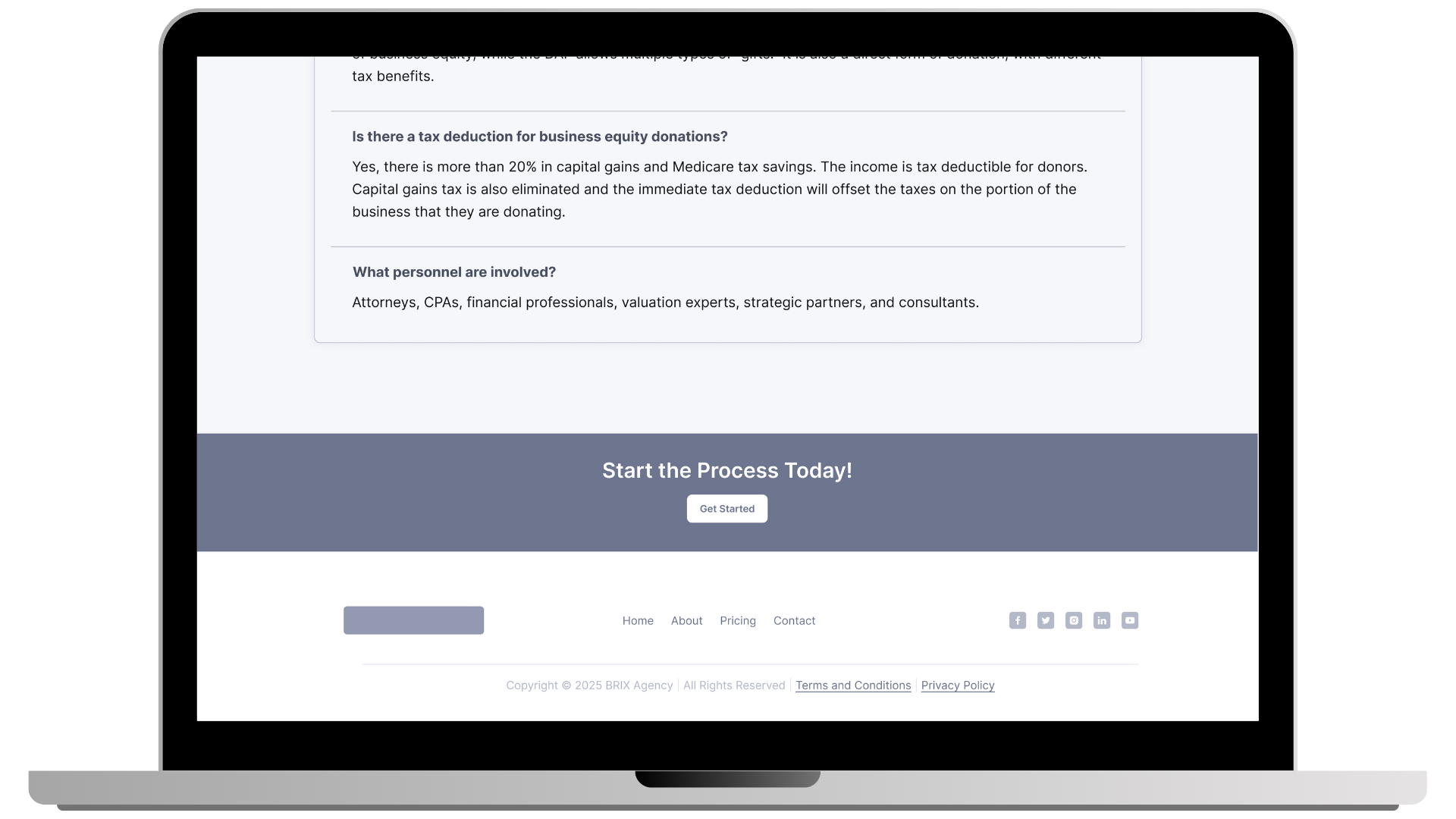
Allows the user to input their information to create their dashboard. It will include questions about the user, their nonprofit, & sign-up steps.
Sign Up/Dashboard:
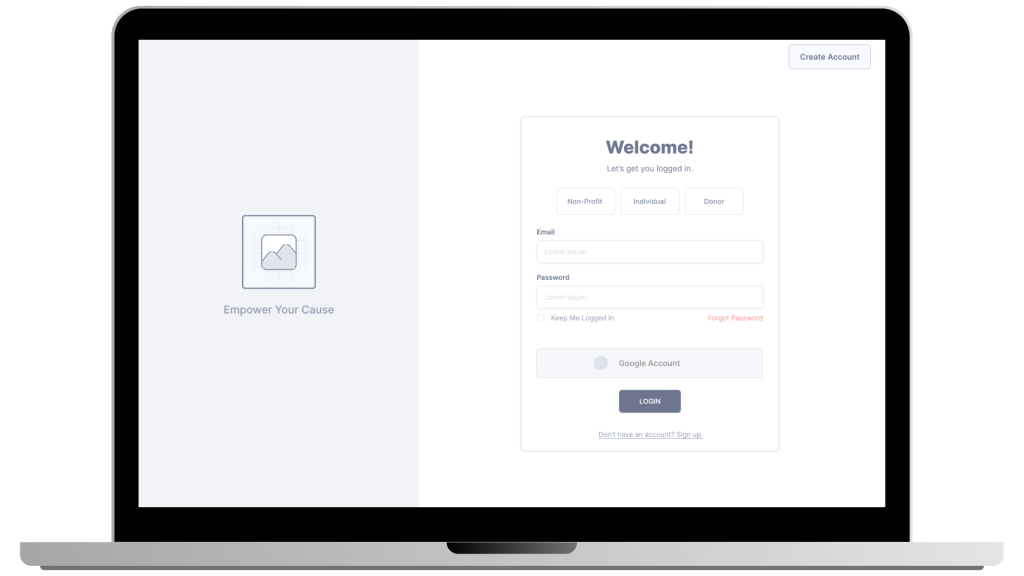
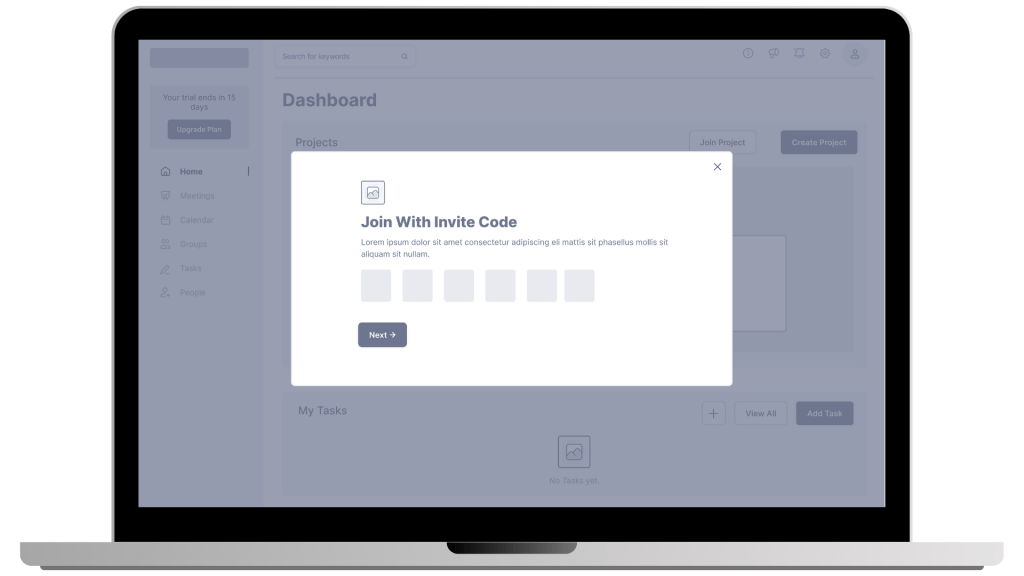
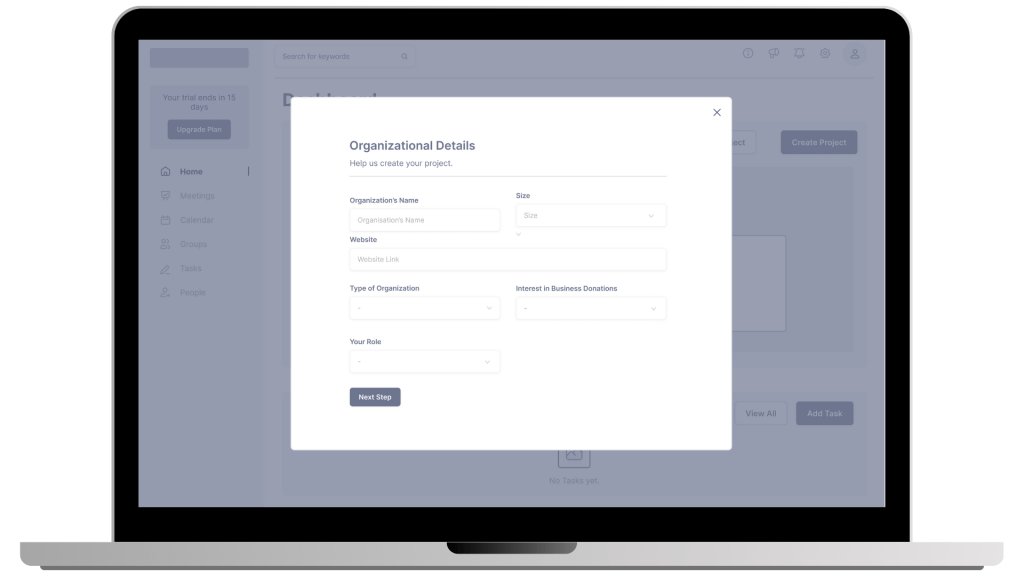
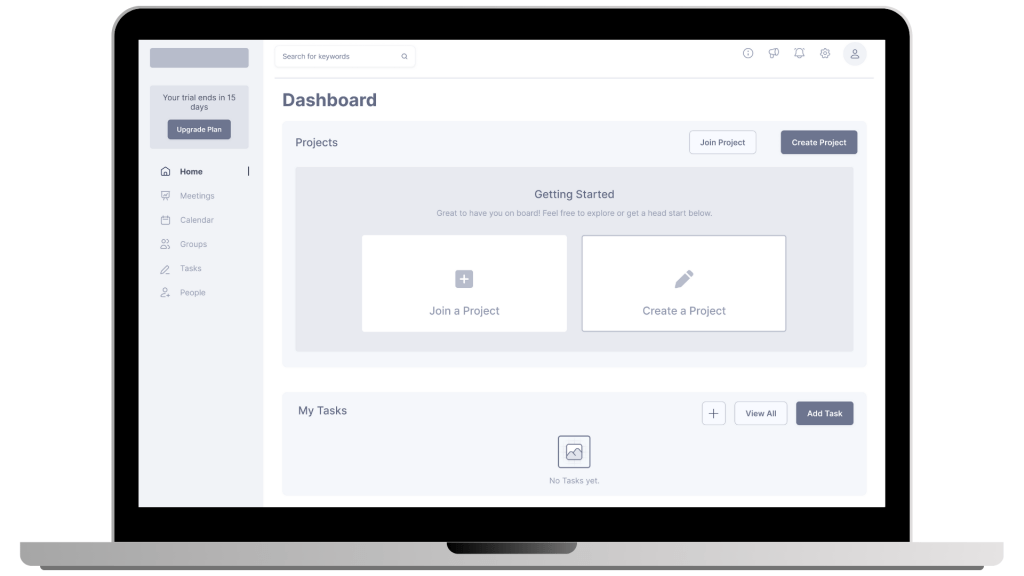
Allows users to collaborate and monitor donation projects. Dashboard will include projects, relevant tasks, team members, tutorials, and more.
Our Goal
Educate nonprofits about BED donations
Create a seamless onboarding experience

Empower nonprofits of all sizes to conduct BED
Nonprofits want BEDs but lack the knowledge & skilled personnel to accept them.
6 interviews were conducted with nonprofit organization leaders at varying knowledge levels of BED. From our interviews, it was revealed that:
- Nonprofits are unfamiliar with this type of donation yet are interested in accepting BEDs as another form of income.
- Nonprofits were concerned about having the necessary personnel to process this type of complex donation.

Who We Are Designing For
Leaders of Small-to-Medium Size Nonprofits.
A majority of nonprofits fall under this category, but few are able to actively process BED donations.
The Process
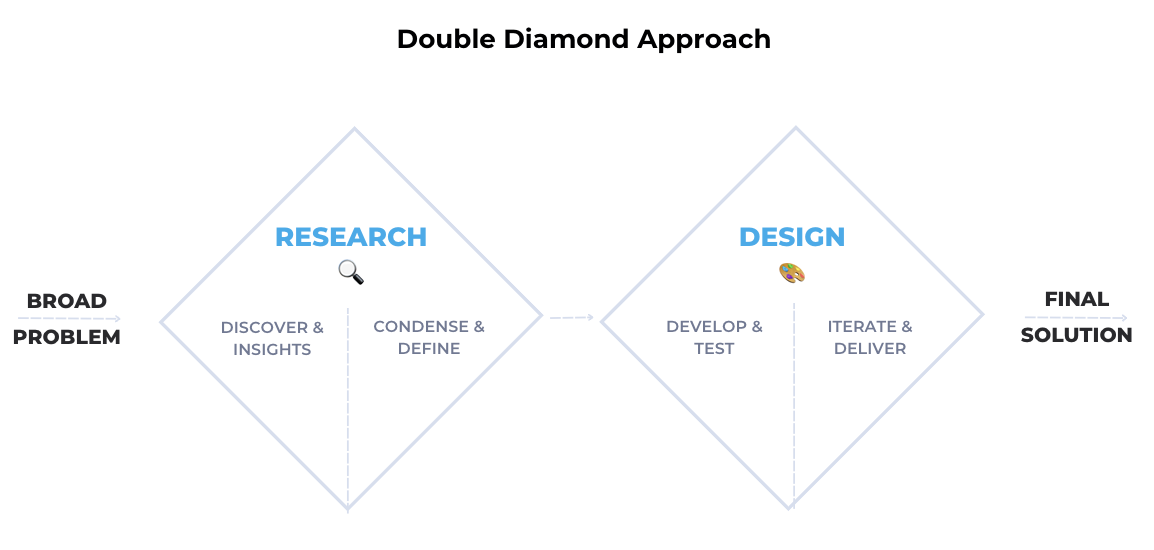
Our process is based on the Double Diamond Approach. We aimed to define the broad problem, conduct extensive research, condense and redefine our project scope based on research insights. Eventually, our efforts provided our final solution for the ongoing development of DonateEquity.
Project Milestones
To structure this project into clear, actionable goals, my team established three key milestones to help guide our progress.
01.
Exploring the Problem Space
Understand the complex donation process, nonprofits’ current involvement, and how our sponsor manages it to identify key pain points.
02.
Addressing the Problem Space
Explore ways to simplify the process through web design, define necessary content and context, and gather inspiration to shape the ideal user flow in our designs.
03.
Design Iteration & Validation
Apply insights from Milestone 2 to guide design, test concepts with stakeholders, and move into mid-fidelity designs with UX writing.
01. Exploration & Research
Learning More About How DonateEquity Works
We began by interviewing the DonateEquity team to gain insight into their process and the role they play. We then spoke with various nonprofit organizations to identify their challenges, needs, and opportunities related to accepting different types of donations, with a focus on BED. Finally, we interviewed attorneys who collaborate with DonateEquity to ensure we understood the legal constraints and considerations that needed to be addressed.
Through these interviews, we discovered that most nonprofit organizations were unaware of BED until they were contacted by DonateEquity. As a result, our web application will not only serve as a tool for managing donations but also act as an informative resource for all stakeholders involved. The following is a summary of our key findings from these discussions.
Interview Findings
Donate Equity Team
To automate the BED process by educating and facilitating transactions between donors + donation personale. Have the DonateEquity team serve as supporting actors in the donation process.
Nonprofits
Almost all of the nonprofits were unfamiliar with the process of BED donations. Nonprofits would like an easy-to-use web application that involves little to no learning curve and low barrier of entry.
Attorney Team
Would like a system that sorts nonprofits and BED as not all nonprofits should conduct BED, and not all BED amounts should be accepted, respectively.
02. Addressing the Problem Space
Determining the Onboarding Flow
We completed a comparative analysis of 14 websites and web applications. Our analysis focused on the onboarding and introductory processes of these sites and applications to…
- Understand how other sites introduce users to their content.
- Identify features sites include to make this a smooth experience.
Then we completed a dot voting activity of our favorites, likes, and dislikes of the websites. We included our reasoning explaining our votes to gain more understanding of why we want to include certain features over others when determining the onboarding user flow.
From these activities, we learned the best methods in which we could help users reach their desired goal of learning more about BED and become more familiar with the process.
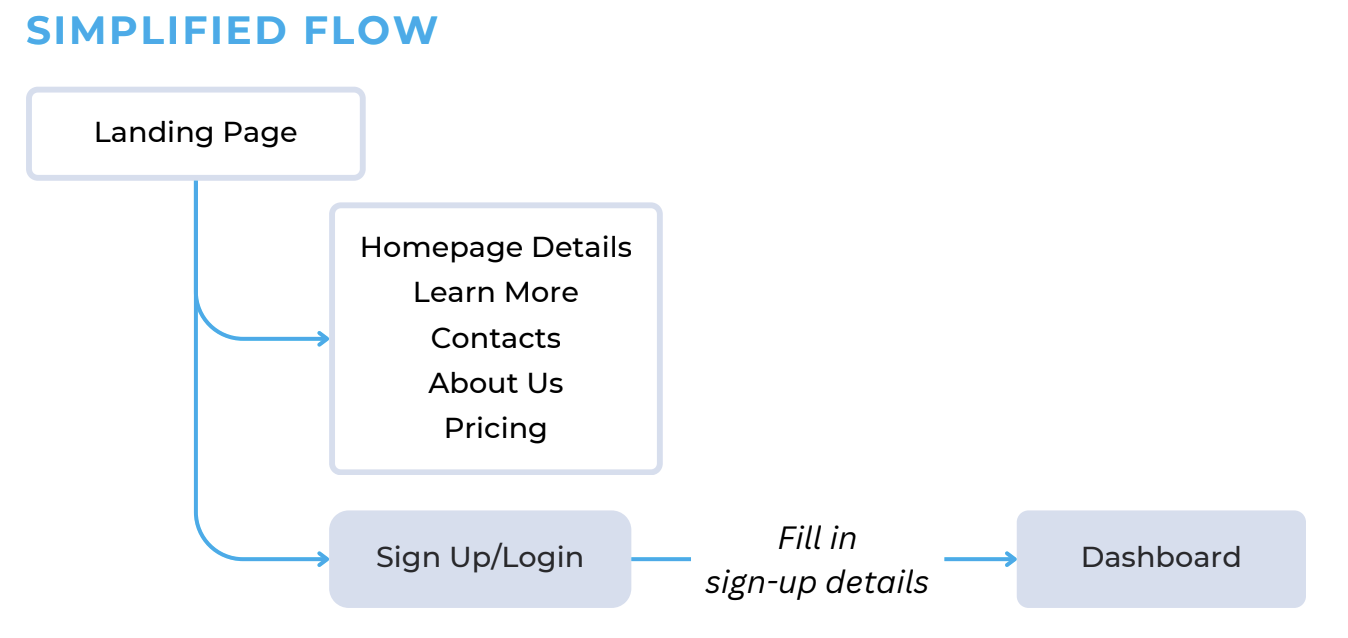
We refined our user flows and sitemaps to define feature placement and user actions.
Our deliverables for this project now include a low-to-mid-fidelity mockup of the onboarding experience for nonprofit leaders and thorough research that provides our sponsor with ideas of clear tonality within the onboarding flow.
03. Design Iteration & Validation
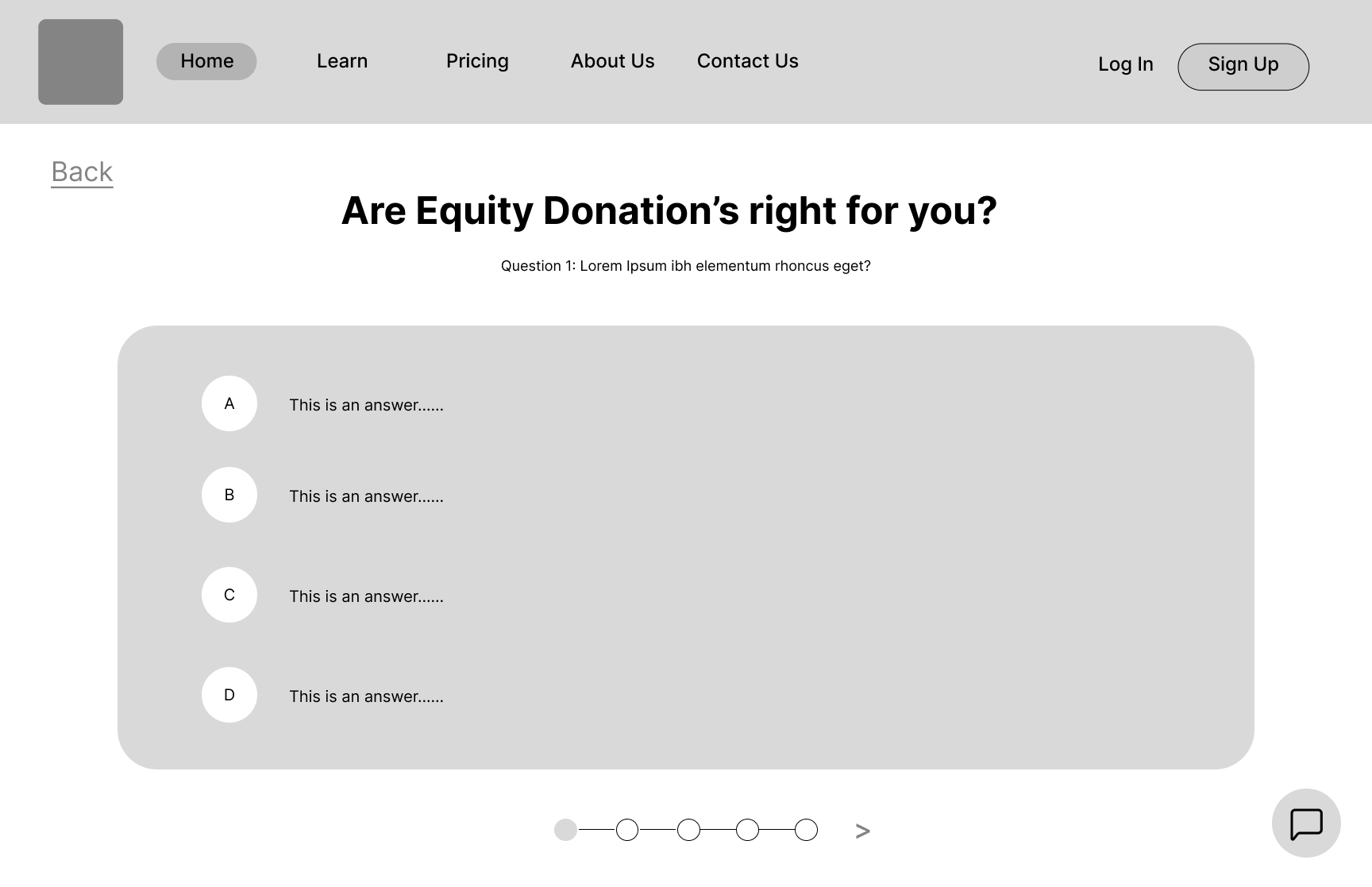
We split our team of 9 into two design teams: one focusing on the landing page, while the other focused on the login/signup/dashboard section. I was apart of the landing page group. I assisted in creating the structure of the landing page, deciding what content would be included, the pathway page, informational blog, and quiz pages.
First Prototypes
We created sketches to visualize all the information we mapped out in our user flow and sitemap. We then translated our sketches into low-fidelity designs in Figma to visualize the potential appearance of the site and explore how the design inspirations we discovered could be integrated into our product. These lo-fi designs were then concept tested with nonprofits to determine if the flow was appropriate for their needs. Below are the lo-fi screens I created.
Testing
After creating our low-fidelity designs, we tested them with nonprofit organizations, the DonateEquity team, and attorneys.
Nonprofits
Nonprofit organizations expressed a preference for having pricing options displayed upfront. Want testimonials to appear earlier in the process, as these provided reassurance about the potential of BED.
DonateEquity Team
The DonateEquity team & attorneys both emphasized the importance of giving equal attention to the UX writing as we did to the design by ensuring the writing was clear and simple.
Final Design Walkthrough
From our extensive research, interviews, testing, and design phases, here is the final solution to our
Donate Equity onboarding experience!
Landing Page:
Login / Sign Up / Dashboard:
Thanks for Reading!
Let’s Get in Touch
+1 (765) 426-5691
madiloyd@icloud.com
 madiloyd.com